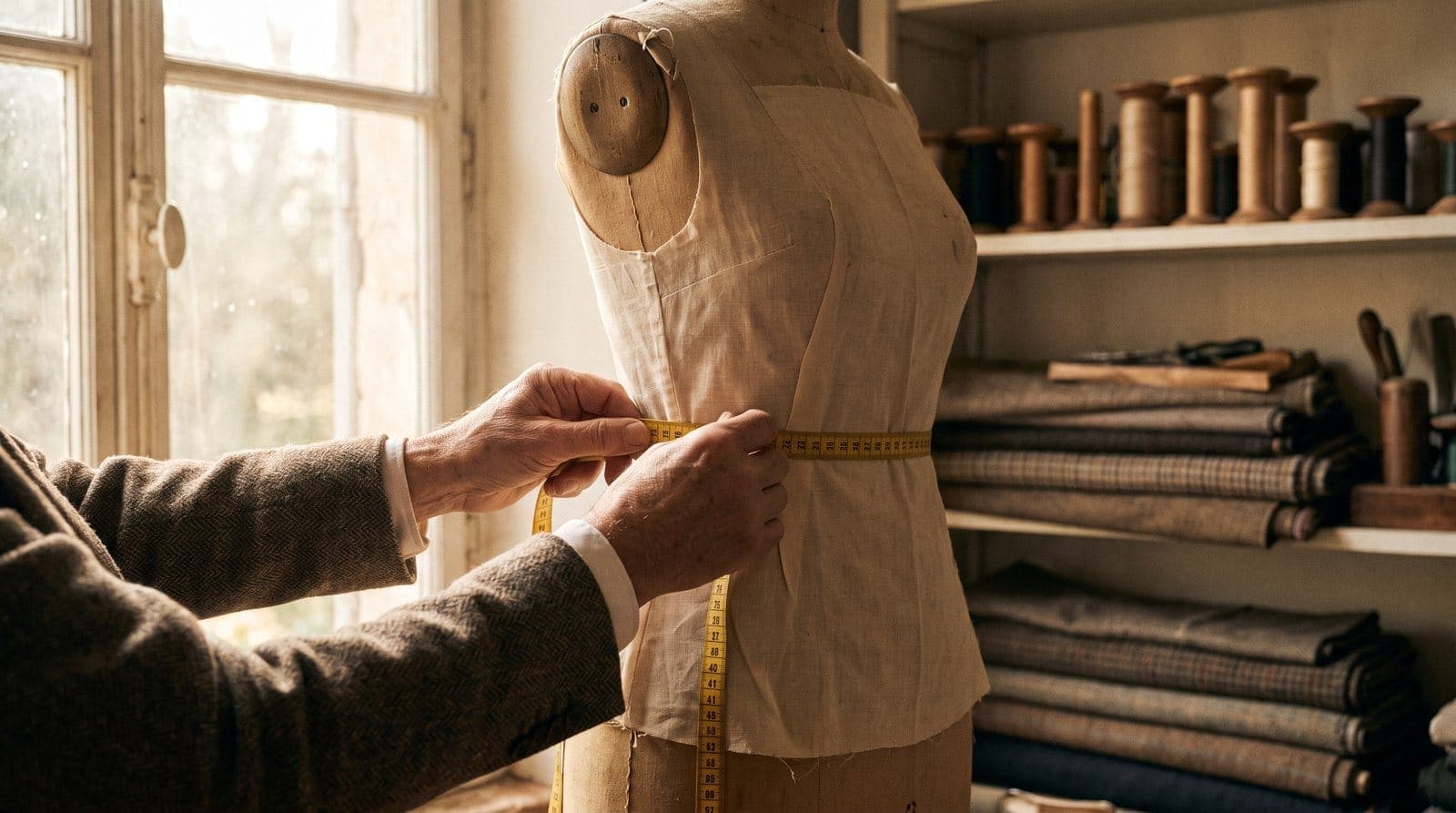
Almost every remake starts the same way: a number that was off by half an inch, written down in a hurry. When you cut from a bad measurement, you don't find out until the garment is on the body, and by then the fabric is spent and the deadline is closer. Accurate measuring isn't a talent you either have or don't. It's a routine. Here is one you can repeat with every client.
Set the body up before you set the tape
Ask your client to wear something close-fitting, and to stand naturally, feet together, arms relaxed, looking straight ahead. People instinctively suck in or square their shoulders when a tape comes out, and that posture won't be there on delivery day. Take a beat and let them settle. Where you place the tape matters just as much as how you read it: keep it snug but never pulled tight, and level all the way around. A tape that dips at the back gives you a number that fits no one.
Measure in the same order, every single time
The single biggest source of error is a missed measurement you don't notice until you need it. Fix that by always working top to bottom in a fixed sequence, neck, shoulder, chest, bust, waist, hip, then lengths and sleeves. When the order never changes, your hands remember it and your eyes catch the gap. Write each number down the instant you take it. "I'll remember it" is how a 38 becomes a 36.
Log the how, not just the number
A measurement without context is half a measurement. Note whether the waist is snug or with ease, where exactly you measured the sleeve to, and any asymmetry, one shoulder lower, a longer left arm. Six weeks from now, on the next order, those notes are the difference between a first-fit success and another appointment. Keep a reference of a client's own well-fitting garment when they have one; a beloved jacket is often the truest brief you'll get.
Double-check the three that ruin garments
If you verify nothing else, verify chest, waist, and the primary length. These carry the most risk and the least forgiveness. Measure them, then measure them once more. The ten seconds it costs is nothing next to recutting a panel.
Keep the record where you'll actually find it
The best measuring routine in the world falls apart if the numbers live on a scrap of paper that goes missing. Store each client's measurements somewhere permanent and searchable, tied to their name and their history, so returning clients never get re-measured from zero and you never cut from a guess. This is exactly what a client profile in thimblely is built for, measurements, preferences, and past orders in one place, on your phone at the fitting table. Get the routine right, keep the record safe, and the remakes quietly disappear.
Run the business, not just the craft
thimblely keeps your orders, clients, measurements, payments and deadlines in one place. Built for tailors, designers and makers.
Explore thimblelyKeep reading
- ProductRunning a Team? How to Assign Work and Stay in SyncGrowing from solo to a small team is a milestone, and a new kind of chaos. Here's how to keep everyone aligned.4 min read
- GrowthYour Client Book Is Your Business: Building Repeat CustomersNew clients are expensive. The ones you've already made for are your real growth engine, if you keep them.5 min read
- ProductFrom Cutting Table to Delivery: Inside thimblely's Orders BoardA close look at how thimblely's Orders keep every garment moving, and nothing slipping through.4 min read